Firm Insights & Updates
Tariffs - Take 3: The Branch that Wasnt There
Trump didn't break IEEPA. Congress let it be broken for forty-eight years.
recommended post

The Revolving Door Has a Billion-Dollar Handle
Tariffs, Tantrums, and Who Actually Pays Part 2
Tariffs, Tantrums, and Who Actually Pays
The Write Off Diaries Part 10 - Loopholia Inc, The Beyoncé of Tax Planning
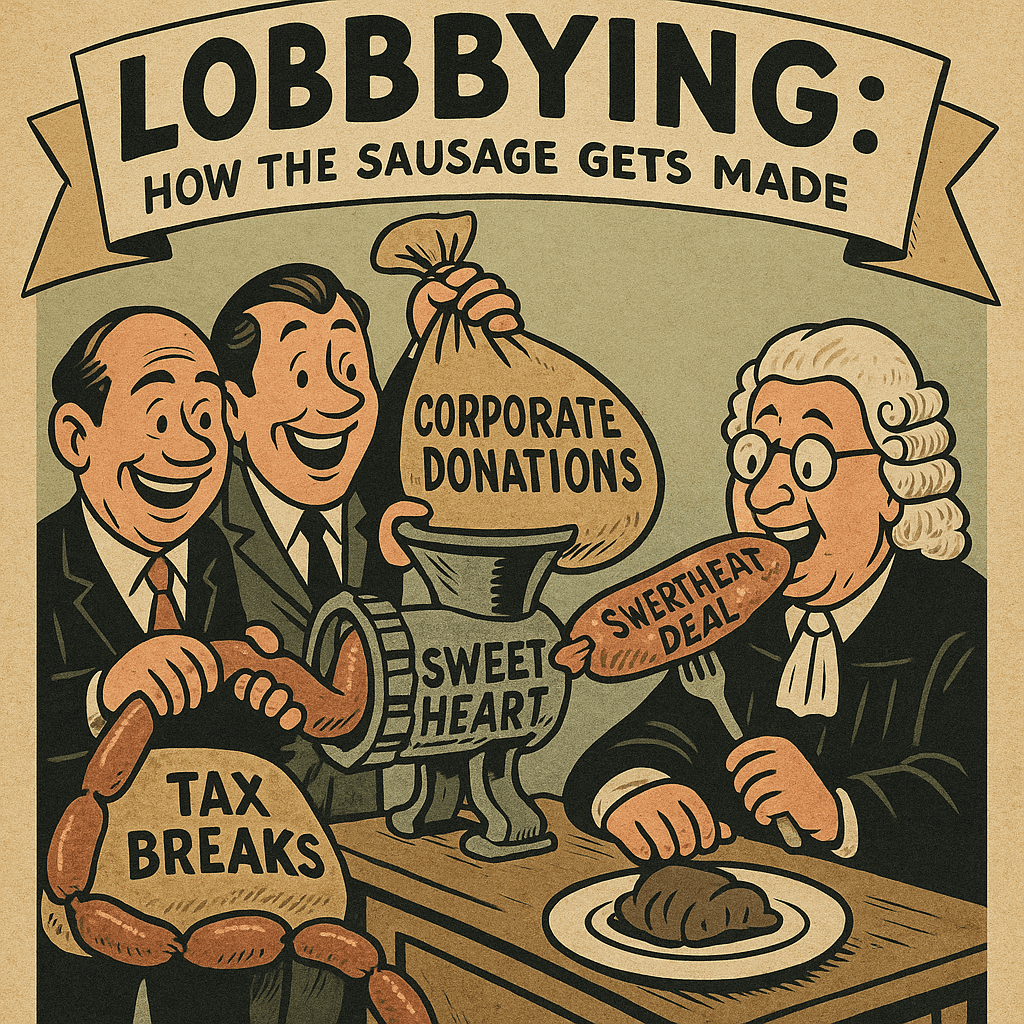
The Write Off Diaries Part 9 - Lobbying: How the Tax Policy Sausage is Made

The Write Off Diaries Part 8 - The Final Boss (For paying the Boss)
The Write Off Diaries Bonus Post - You Could Be Doing This Too (But You Aren’t, and Here’s Why)
The Write Off Diaries Part 7 - Real Estate & 1031s - Sell Everything, Pay Nothing
Tariffs, Take Three: The Branch That Wasn't There
If you've been following along, you already know the punchline. I wrote in November that the consumer was going to eat the tariffs. I wrote last month that the consumer was not going to get the refund. Both happened. I'm beginning to suspect this country has a pattern problem.
So this is the third — and hopefully final — post in this series, and I want to do something different. I want to stop talking about what happened and start talking about why it keeps happening.
Because here's the part nobody on cable news will say out loud: blaming Trump for the tariffs is intellectually lazy. Not wrong, exactly. Just lazy. It's the kind of analysis that makes you feel smart for forty-five seconds and then leaves you exactly where you started — which is, conveniently, where the actual people responsible would like you to be.
Let me explain.
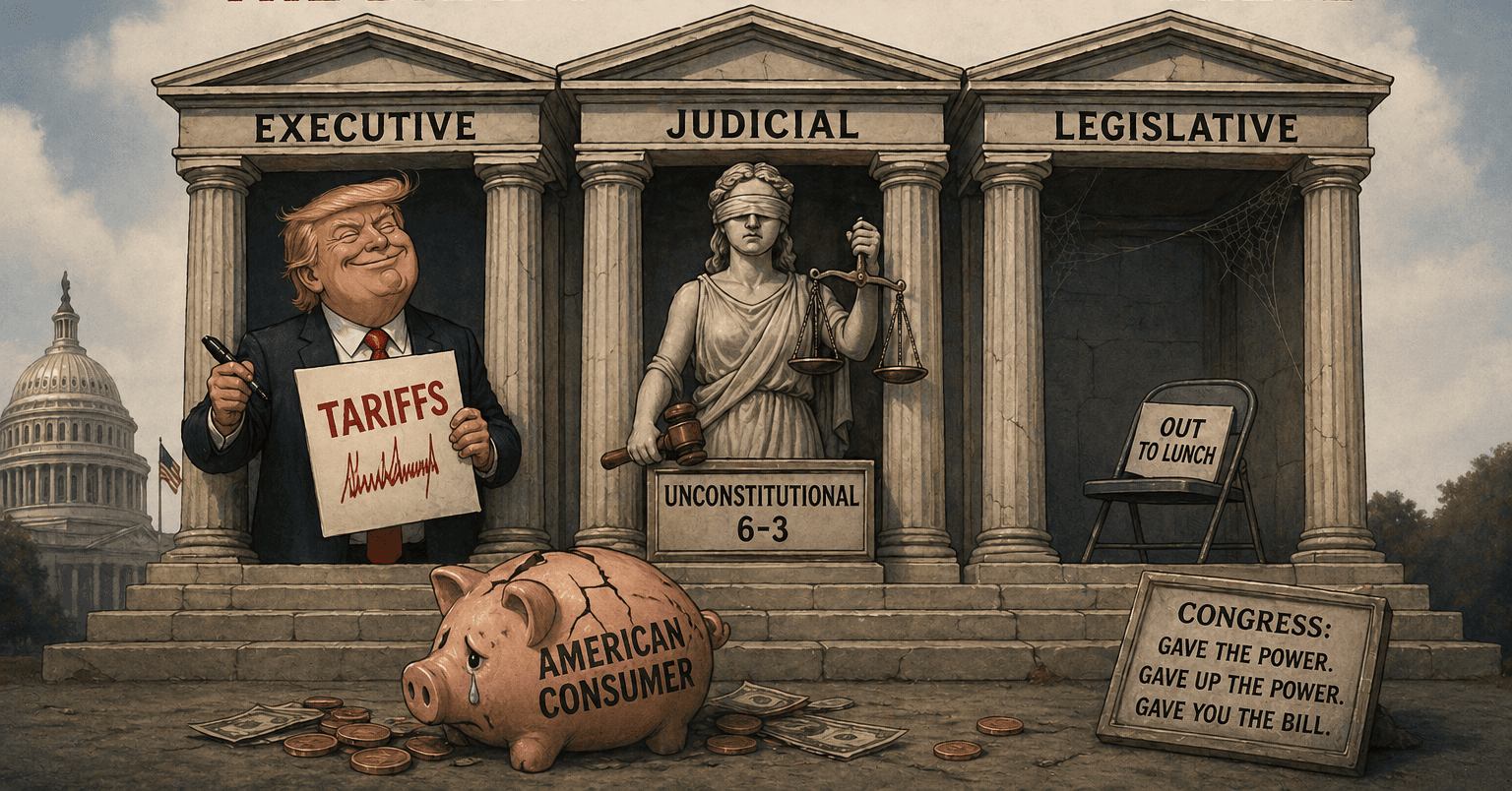
The Three-Branch Pop Quiz
Quick civics refresher, because apparently we need one:
The President proposes and executes.
Congress legislates and holds the purse.
The Supreme Court interprets when the other two start stepping on each other.
Now, on the tariff question, here's what each branch actually did:
Trump: Issued an executive order under IEEPA imposing tariffs on basically every country on earth. Did he overstep? Yes. Was it a power grab? Also yes. Was it surprising? Have you met him.
The Supreme Court: Heard the case. Ruled 6-3 in February that the President cannot unilaterally impose taxes on the American people because — and I cannot believe this needed to be said out loud in 2026 — Article I, Section 8, Clause 1 of the Constitution gives that power to Congress. The Court did its job. Painfully. Slowly. But it did its job.
Congress: 🦗🦗🦗
You see the problem.
The Statute That Should Not Exist
Here is the thing nobody is reporting on. The reason Trump was able to do what he did is not because he's some kind of constitutional rogue. It's because Congress gave him the gun in 1977 and has spent every year since refusing to take it back.
The International Emergency Economic Powers Act — IEEPA — was passed by Congress to let the President respond to genuine national security emergencies. Hostage crises. Hostile state actors. Sanctions on rogue regimes. The kind of thing where you can't wait three months for a floor vote.
It was never meant to be a tariff statute. The word "tariff" does not appear in it. The word "duty" does not appear in it. Congress wrote it in 1977 and then sat back and watched as president after president — Republican and Democrat — stretched it like silly putty into whatever shape they needed for that week's foreign policy mood.
Trump didn't break IEEPA. Congress let it be broken for forty-eight years.
"But Congress Can't Agree on Anything"
Yes, I know. That's the cope, and it's not good enough.
Congress can absolutely agree on things. They agreed to pass the CARES Act in three days. They agreed to bail out the banks in 2008. They agreed to a $1.7 trillion omnibus in 2022 that nobody read. When Congress wants to act, Congress acts. When Congress doesn't want to act, Congress hides behind the President and lets him take the heat — and then runs to the cameras to denounce him for doing the thing they refused to do themselves.
This is not a bug. This is the business model of the modern legislature. Delegate the hard stuff to the executive branch, complain about the executive branch, get re-elected, repeat.
You know who could fix the IEEPA problem in roughly forty-eight hours? Congress. They could amend the statute tomorrow morning to explicitly exclude tariff authority. They could pass the Trade Review Act that's been sitting in committee. They could reclaim the tariff power the Constitution literally already gives them.
They won't.
What Could Have Been Done — And By Whom
Now to the part you actually came here for. Once the Court struck the tariffs down, there were five real options on the table for fixing the refund inequity. Watch carefully — every single one of them required Congress to do something. Spoiler: Congress did nothing.
Option 1: A consumer rebate, funded out of the refund pool. Take 30% off the top of the $166 billion before it goes back to importers and send it directly to American households as a tariff rebate check. Same delivery mechanism as the 2020 stimulus payments — Treasury already knows how to do this. Roughly $1,500 per household. Who needs to authorize this? Congress. Did Congress do this? Take a wild guess.
Option 2: Pass-through disgorgement. Condition the refund on the importer either absorbing the original tariff in their margin (in which case, refund away) or rebating their downstream customers (in which case, the refund has to flow). Default presumption: 80% pass-through, drawn from the New York Fed's own published research. Burden of proof on the importer to show otherwise. Who needs to authorize this? Congress. Or, alternately, Treasury under existing rulemaking authority — but Congress would have needed to back it up. Neither happened.
Option 3: Mandatory chain pass-through. The model already exists in state sales tax law. When a vendor over-collects sales tax and gets a refund from the state, most states require the vendor to refund the customer or remit to escheat. Illinois has this rule. Why doesn't CBP? Because Congress never legislated it for federal duties.
Option 4: A consumer trust fund. Take the unclaimed portion of the $166 billion — there will be a meaningful share that small importers never bother to file for — and route it into a Consumer Tariff Relief Trust administered by Treasury, distributed by lottery or by income tier, capped at some reasonable per-household amount. Statutory authorization required. Who would authorize it? Congress.
Option 5: Just amend IEEPA so this never happens again. Strip tariff authority out of the emergency powers framework explicitly. Require an affirmative congressional vote within 60 days for any tariff exceeding 5%. End the kabuki theater of "national emergency" declarations being used as cover for ordinary trade policy. Who would do this? Congress.
Five options. One responsible branch. Zero action.
The Part Where Both Sides Get Mad At Me
I've watched the political class spend three years using the tariff issue as a punching bag. Democrats call it Trump's economic vandalism. Republicans call it strategic genius. Both camps somehow agree, in their separate ways, that this was a presidential story.
It wasn't. It was a congressional abdication story with a presidential face on it.
If your senator was on TV last month talking about how outrageous the tariff refund process is, and they have not introduced legislation to either (a) compensate consumers or (b) amend IEEPA, then your senator is lying to you for ratings. That's both parties. That's almost every member of both chambers. The number of legislators who have actually introduced corrective legislation on either front since February can be counted on one hand.
What This Means For You, Practically
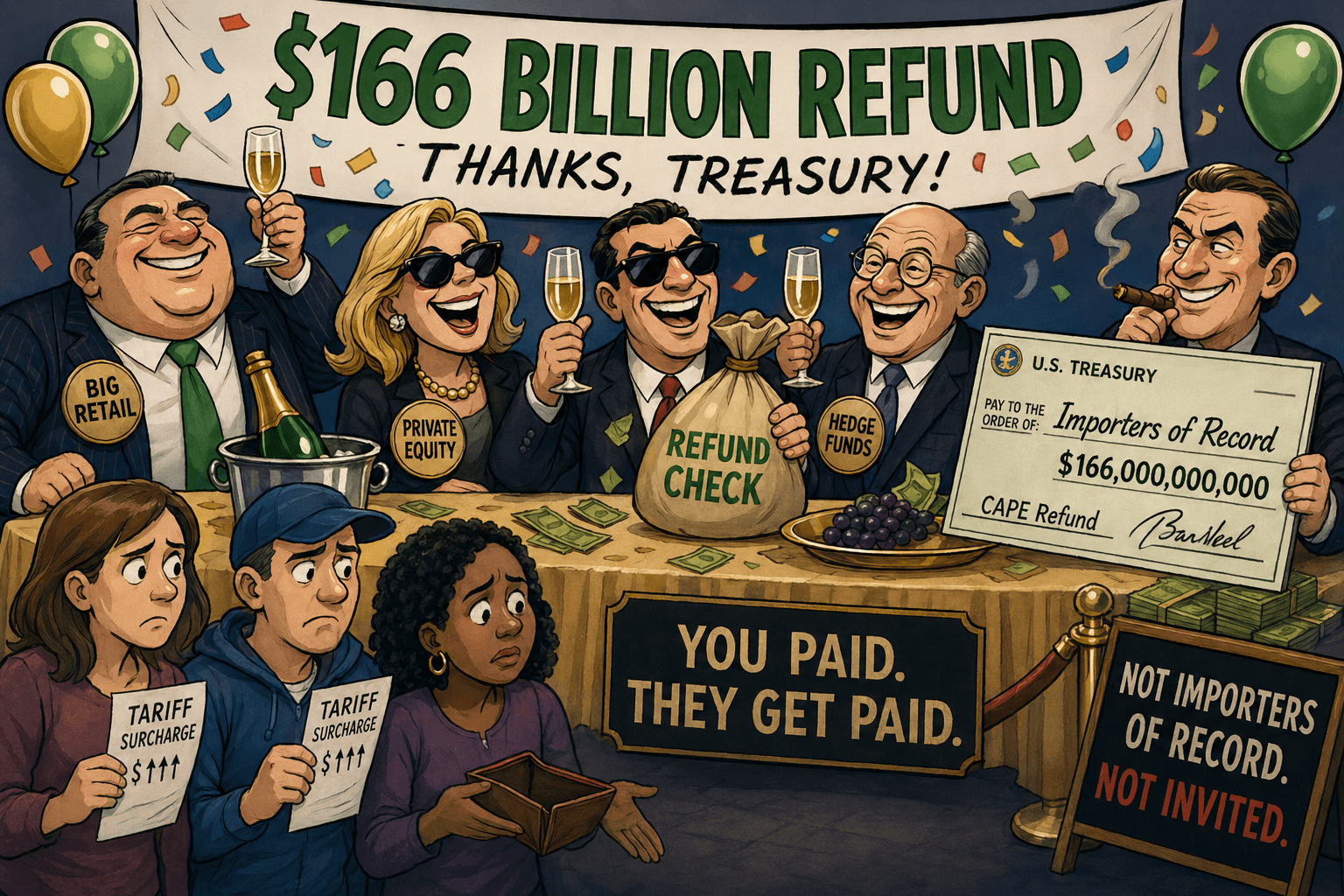
If you're a small business owner, this matters. The CAPE refund process — which I covered in the last post — is going to refund $166 billion to importers over the next eighteen months. Some of those importers passed the cost through. Some didn't. The ones who passed it through are going to face downstream litigation from their customers, and the courts will work it out the slow, expensive, lawyer-enriching way. That's what happens when the legislative branch goes missing.
If you're a consumer, you already paid the tariff. You're not getting it back. Not from Trump. Not from the Court. Not from CBP. And not from Congress, because asking Congress to send you money it already collected is apparently a heavier lift than landing on the moon.
If you're a voter, the next time you watch a senator perform outrage on cable news about tariffs, the question to ask is not "what is Trump doing." The question is: what have you, personally, introduced, sponsored, or voted on to fix this in the last six months?
The answer, almost universally, will be nothing.
Closing Thought
Three branches. One did its job poorly. One did its job belatedly but correctly. One did not show up at all — and somehow, miraculously, that branch is the one nobody is mad at.
I don't know how to fix Congress. Nobody does. But I know that pretending the tariff story is about one man in a suit signing executive orders is the comfortable lie, and the comfortable lie is exactly what got us here.
The Constitution names three branches for a reason. We have, functionally, two. And until that changes, we're going to live this same movie again — different president, different statute, different industry, same outcome. The American consumer pays. The lawyers get rich. And the people who were actually supposed to prevent it never even had to get out of bed.